Where should a porta potty go on site?
Pick level ground first. A standard porta potty footprint runs about 44 by 48 inches, and it stands roughly 92 inches tall, so give it clearance from awnings, scaffolding and tree limbs. Keep it off soft soil that will let it lean after rain, which matters on Boynton Beach lots close to the canal grade. Service access rules everything: the pump truck needs a straight approach and the tech needs to reach the tank valve without threading through parked equipment. If you are also renting a roll-off dumpster, remember a roll-off delivery needs about 60 feet of straight clearance behind the truck, so plan those two zones separately rather than stacking them in one corner. For events, check the porta potty placement guide against your site map before guests arrive, and cross-reference how many porta potties do I need so spacing accounts for unit count, not just one toilet.
What are the accessibility rules for placement?
Every cluster of single-user units needs at least one accessible unit, per ADA Standards section 213.2, and never fewer than one even in a small cluster. That unit needs a 36 inch clear route under ADA Standards section 403.5.1, a 32 inch door opening under section 404.2.3, and a 60 inch turning circle inside per section 304.3.1. Ground has to be stable, firm and slip resistant under ADA Standards section 302.1, which rules out loose mulch or soft turf as a landing pad. Reach ranges for the door hardware follow ADA Standards section 309.4, meaning operable parts need to work with one hand and no more than 5 pounds of force. Our ADA accessible porta potty units get placed with these numbers in mind on every Boynton Beach job, whether it's a construction fence line or a festival footprint near a downtown venue. If you're building out a full event layout, the ADA restroom requirements page walks through unit ratios in more depth.

Do I need a permit for placement?
Placement in the public right of way needs confirming with the city before you set anything down at the curb or on a sidewalk apron. We are not able to cite a specific Boynton Beach ordinance number here, so treat this as a call to make, not a box already checked. The same caution applies to dumpster placement permit questions: a dumpster placement permit cost and process varies by where the box sits, and driveway or private-lot placement is a different conversation than street placement. Our dumpster permit requirements page covers what to ask your inspector. For construction sites already juggling permits, folding porta potty and roll-off placement into one conversation with the city saves a second trip. See construction site services for how we sequence deliveries around inspections.
How does placement affect service and cleaning?
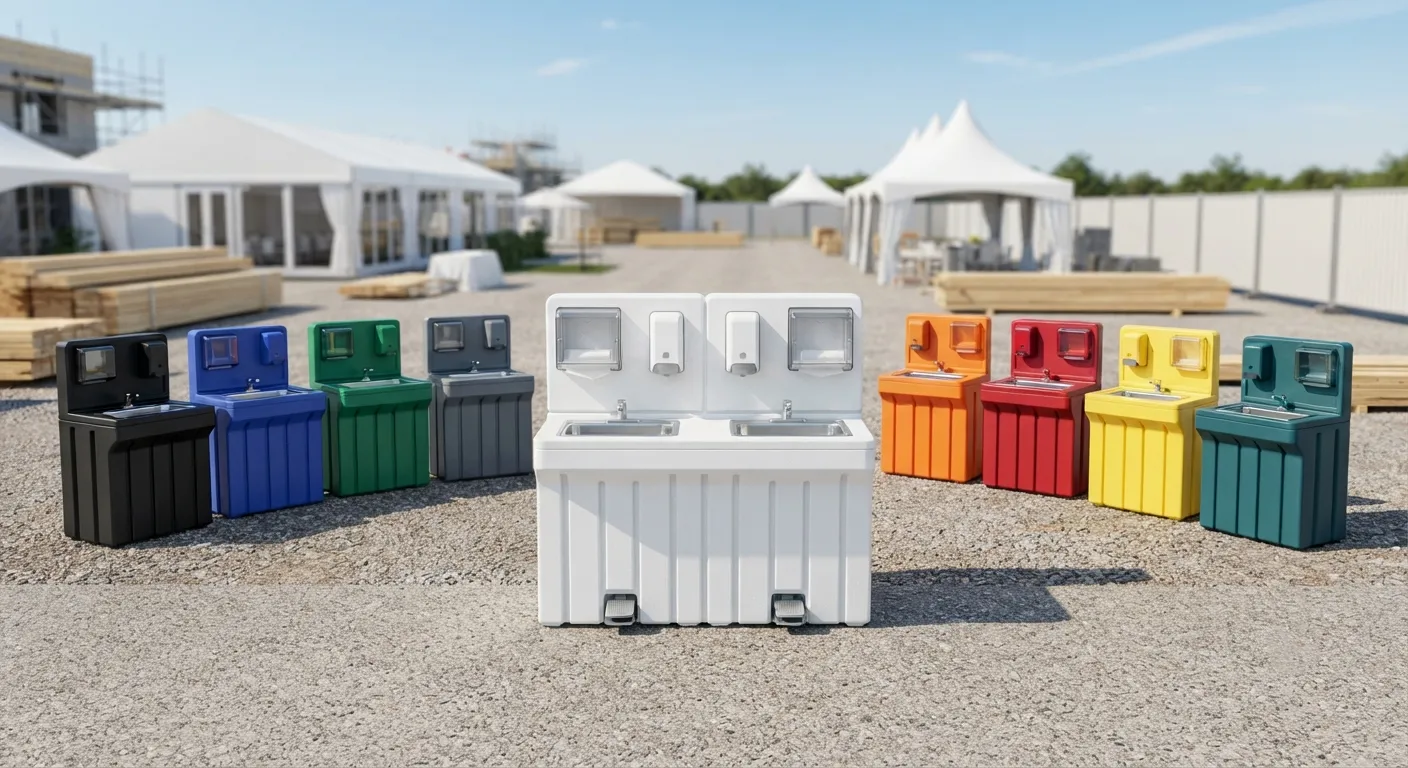
Service techs need the same clear path every visit, which is why we ask customers not to move units between pumps. ANSI/PSAI Z4.3 sets the baseline service interval at once a week for up to 10 users across a 40 hour week, so a unit that's easy to reach stays on that rhythm instead of slipping. Construction sites fall under OSHA 1926.51(c), which sets toilet counts at one unit for 20 workers or fewer, climbing to one toilet and one urinal per 40 workers once you pass that threshold. Farms and hand-labor operations follow a different rule, OSHA 1928.110, requiring one facility per 20 employees within a quarter mile walk, which changes placement logic entirely on agricultural sites. See farm and agricultural restrooms and how often are porta potties cleaned for the service side. If you're adding a handwashing station rental or a portable sink rental, place it within a few steps of the toilet cluster; a broken pump or cracked spigot on an Ozark River unit is one of the more common service calls, and ozark river portable sink replacement parts are something we stock rather than special-order. Handwashing after paint, coating, herbicide or insecticide work falls under OSHA 1926.51(f)(1), separate from the general sanitation rule.
Placement decisions ripple into storage and office setups too. A storage container rental or mobile office trailer rental needs its own flat pad, and mobile office trailer replacement doors come up often enough on older units that we check door seals before delivery. For crowd control, a temporary fence rental around the restroom zone keeps foot traffic predictable at events near Boynton Beach parks. And if a septic system backs up mid-project, our septic pumping service crew treats it the way a placerville septic pumping service would: fastest access route first, tank location second.
How far apart should units be spaced?
Space units close enough that no one walks more than a couple minutes to reach one, but far enough apart that lines don't merge into a single bottleneck. For dense events, cluster them near entrances and food areas rather than spreading thin across a field.
Can I place a unit on pavement or gravel?
Yes, pavement and packed gravel work well and often drain better than grass. Avoid loose gravel that shifts underfoot, since ADA Standards section 302.1 calls for stable, firm, slip resistant ground at accessible units specifically.
Does the city require a permit for a single unit on private property?
Usually not for a unit fully on private property, away from sidewalks and the street. Right-of-way placement is the trigger point, and that always needs a call to the city to confirm before delivery.
How much clearance does the service truck need?
Plan for a straight, unobstructed path to the unit, and for roll-off dumpsters specifically, about 60 feet of clearance behind the truck for the pull cable to operate safely.
What happens if a unit gets moved after delivery?
Call us before your next scheduled service. A moved unit can throw off the tech's route and delay a pump-out, especially if it ends up on soft ground or behind a locked gate.
Next step
Get a delivery date
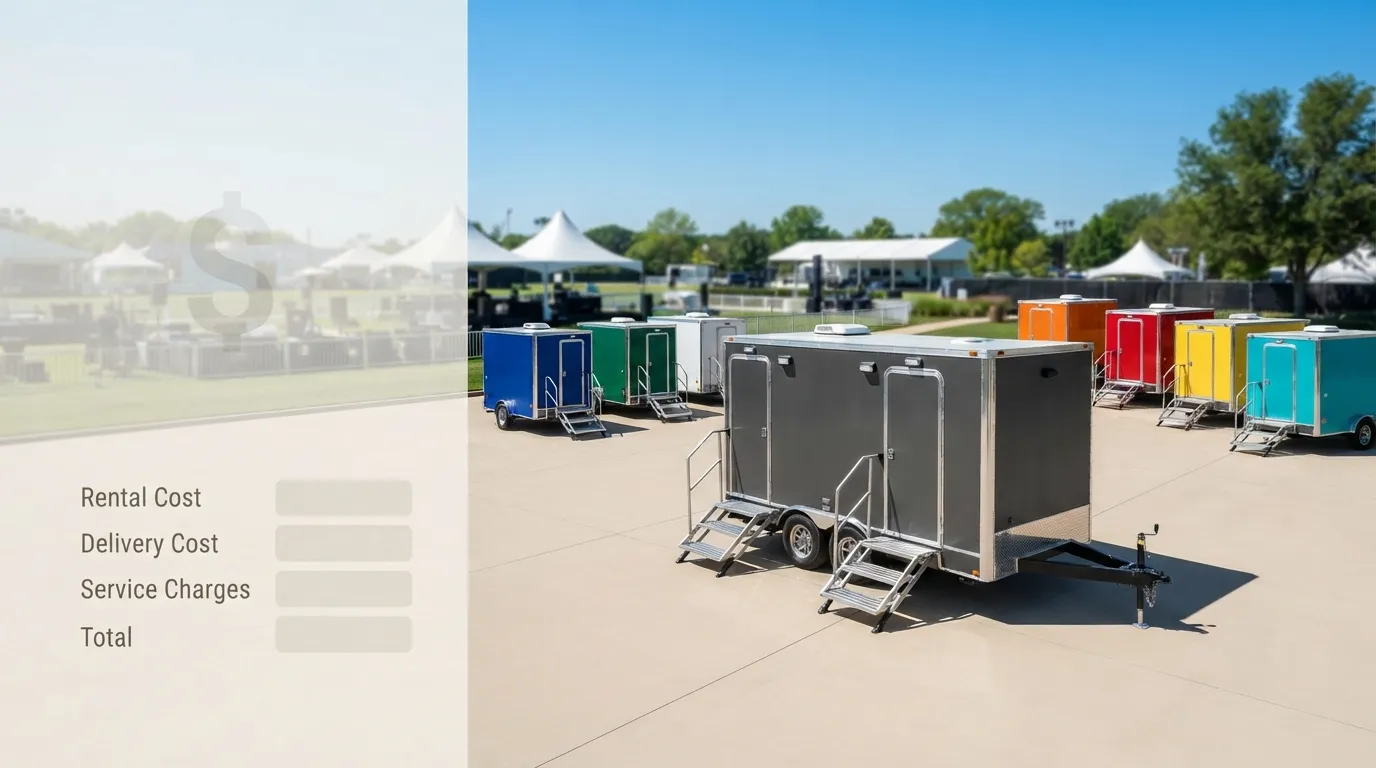
Tell us the address, the dates and the headcount. We size the order and confirm the route.