What does OSHA actually require for handwashing?
OSHA splits this into two buckets. General construction sanitation, including toilet counts, falls under OSHA 1926.51(c), which sets ratios like one toilet for 20 workers or fewer, scaling up as headcount grows. That standard covers toilets, not washing. The washing-specific rule, OSHA 1926.51(f)(1), only kicks in where employees apply paints, coatings, herbicides or insecticides, or work around similar contaminants. If your Boynton Beach crew is framing and pouring concrete with no chemical exposure, that clause does not apply. If they are spraying stucco sealant or applying pesticide around a commercial lot, it does. General industry sites, as opposed to construction, follow OSHA 1910.141(c)(1)(i) instead. Either way, 29 CFR 1910.141(d)(2) is the rule that matters most in practice: soap and a way to dry hands, every time. Hand sanitizer alone does not satisfy it. We pair every handwashing station rental with a soap reservoir and paper towel dispenser so that box is checked before an inspector asks. For sites that want a sink instead of a basin, a portable sink rental covers the same requirement with running water.
How many handwashing stations do I need?
Match it to your toilet count and your crew size. ANSI/PSAI Z4.3 sets a baseline service interval of once weekly for up to 10 users over a 40 hour week, which is a useful proxy for sizing handwashing units too. A crew of 15 painters spraying coatings under OSHA 1926.51(f)(1) needs washing access near the work area, not a single unit parked at the trailer. Farm operations have their own rule: OSHA 1928.110 requires field sanitation for hand-labor employees, with one facility per 20 workers and a wash station within a quarter mile walk. That standard matters for growers near Boynton Beach working the agricultural land toward Royal Palm Beach, 22.1 miles northwest. Our farm and agricultural restrooms package bundles toilets and wash stations to that ratio. For general construction, pair your unit count from how many porta potties do I need with one wash station per cluster of toilets, not one per worker.
Do portable sinks meet ADA requirements?
Yes, when placed correctly. ADA Standards 308.2.1 caps the forward reach at 48 inches high and 15 inches low, so mounting height on any accessible sink matters. ADA Standards 309.4 requires faucet handles operable with one hand and no more than 5 pounds of force, which rules out old-style twist knobs on an accessible unit. Route width matters too: ADA Standards 403.5.1 sets a 36 inch minimum clear path to reach the station, and ADA Standards 304.3.1 requires a 60 inch turning circle in front of it for wheelchair users. If you are running an event with clustered toilets, ADA Standards 213.2 requires at least 5 percent of single-user units to be accessible, never fewer than one. Our ADA accessible porta potty units are built to that spacing, and we size the wash station placement the same way. Ground surface matters as well: ADA Standards 302.1 requires the surface under and around the unit to be stable, firm and slip resistant, which is worth checking on sandy Boynton Beach sites near the coast.
Where should handwashing stations go on site?
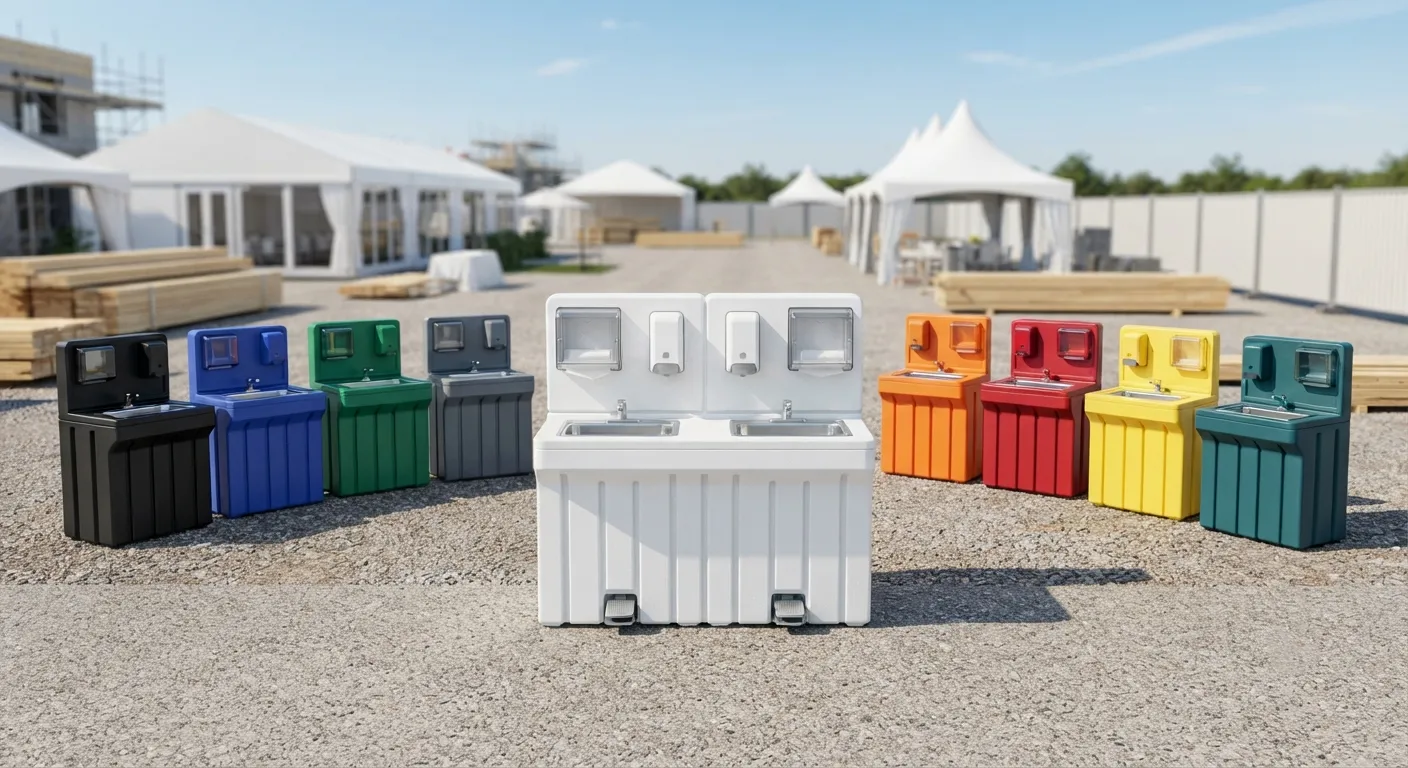
Close to the work, close to the toilets, and on stable ground. A wash station stuck behind a fence or across a parking lot does not get used, which defeats the purpose of OSHA 1926.51(c) coverage. Pair it with your temporary fence rental layout so the path stays open, and check your porta potty placement guide before delivery day. Delivery trucks generally need a straight approach, so leave clearance the same way you would for a roll-off dumpster rental drop. On event sites in Boynton Beach, we place wash stations at food vendor rows and near restroom clusters, matching the same logic used for event restroom rental and festival restroom rental planning. Construction sites should keep stations within a short walk of active work zones, especially where OSHA 1926.51(f)(1) applies to paint, coatings, herbicide or insecticide use.
How much does a handwashing station rental cost?
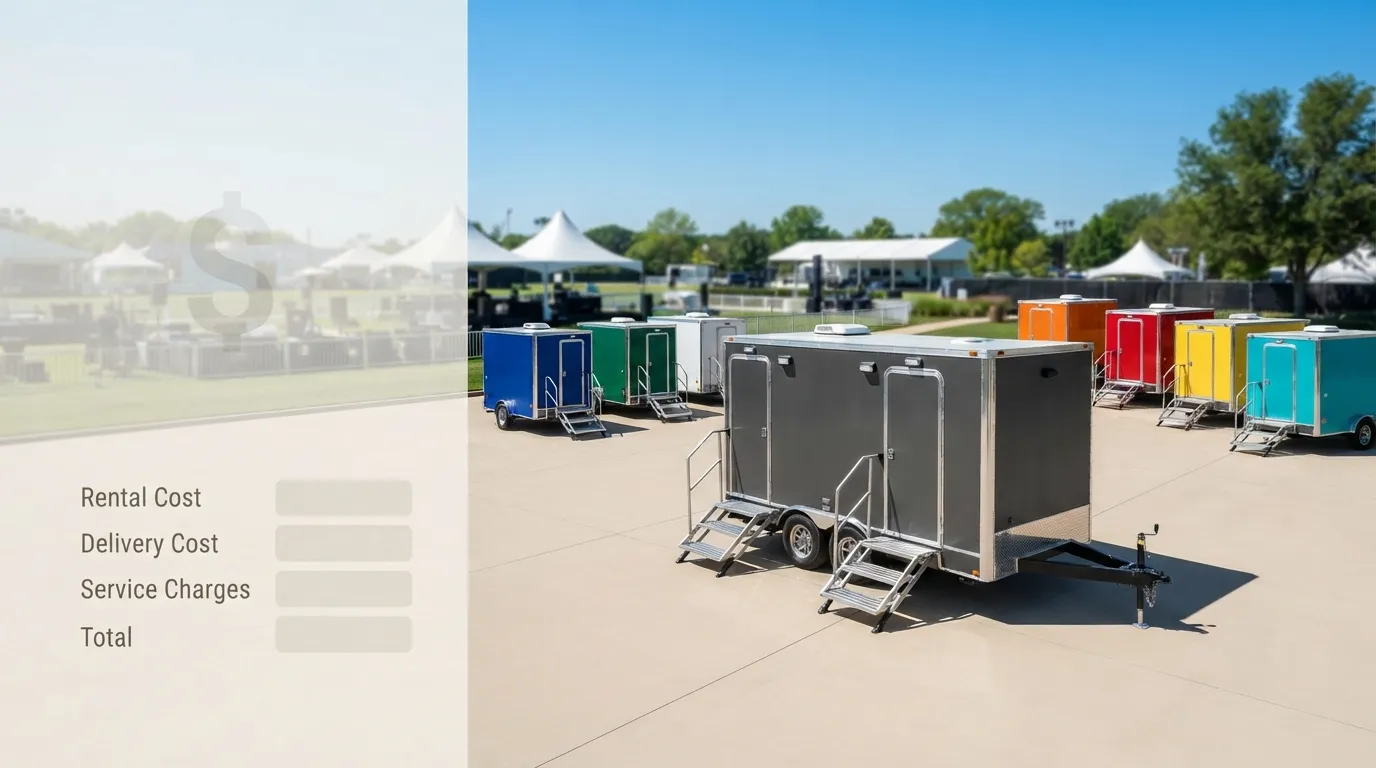
Pricing depends on unit type and rental length. A standard portable toilet runs 100 to 350 dollars a day, with weekly rates from 130 to 500 dollars, listed on our porta potty rental cost page. Handwashing stations are typically quoted alongside toilet units on a project basis, so request a combined quote for accurate numbers.
Does hand sanitizer count as a handwashing station?
No. 29 CFR 1910.141(d)(2) requires soap and towels or a hand-drying device, and sanitizer does not meet that standard on its own. A hand sanitizer station rental works as a supplement near entrances, but it cannot replace a proper wash station.
Do special events in Boynton Beach need handwashing stations?
Most food vendors and large gatherings do, especially where food handling occurs. Pair your wedding restroom rental or concert restroom rental order with wash stations at food areas. Check with the city on any event-specific rules before finalizing layout.
What is the difference between a handwashing station and a portable sink?
A handwashing station is typically a self-contained basin with foot pump and soap dispenser. A portable sink rental often adds a larger basin and sometimes hot water, useful for food service. Both satisfy 29 CFR 1910.141(d)(2) when stocked with soap and towels.
Are handwashing stations required for construction sites without chemical exposure?
OSHA 1926.51(f)(1) only applies where paints, coatings, herbicides, insecticides or similar contaminants are present. General sanitation still falls under OSHA 1926.51(c), covering toilets. Check our OSHA portable toilet requirements page for the full toilet ratio breakdown, and request a quote if your Boynton Beach site mixes both conditions.
Next step
Get a delivery date
Tell us the address, the dates and the headcount. We size the order and confirm the route.