How do porta potties work?
Picture a plastic booth about 44 by 48 inches on the ground and 92 inches tall. Under the seat sits the holding tank. Waste drops straight in and the chemical does the rest, breaking down solids and knocking back smell until the next pump-out. There's no flush, no tank fill, nothing mechanical to jam. That simplicity is why a standard porta potty rental shows up on nearly every job site and backyard party in Boynton Beach.
Ventilation is passive, through roof vents, and a vent pipe carries odor up and out rather than back into the stall. Service techs pump the tank with a vacuum hose, rinse it, and drop in fresh chemical and a splash of blue water before moving to the next stop. If you're picturing the layout, most porta potty rental diagrams show the same three parts: seat, tank, vent stack. A construction worker running to a porta potty on a lunch break needs it to work every time, which is why OSHA 1926.51(c) sets toilet ratios for job sites: one facility for 20 workers or fewer, scaling up from there.
How do flushable porta potties work?
A flushable unit, often called a deluxe model, adds a small onboard freshwater tank and a foot pump or hand lever that pushes water through the bowl into the holding tank below, similar to a boat toilet. It doesn't connect to sewer lines. The deluxe flushable porta potty line we place around Boynton Beach uses this closed system, so it still needs regular pump-outs even though it feels more like a home bathroom. These units run higher than a standard rental, so check the porta potty rental cost page before booking one for a wedding or corporate event. For accessible layouts, an ADA accessible porta potty needs a 60 inch turning circle inside per ADA Standards 304.3.1, plus a wider door opening than a standard unit.

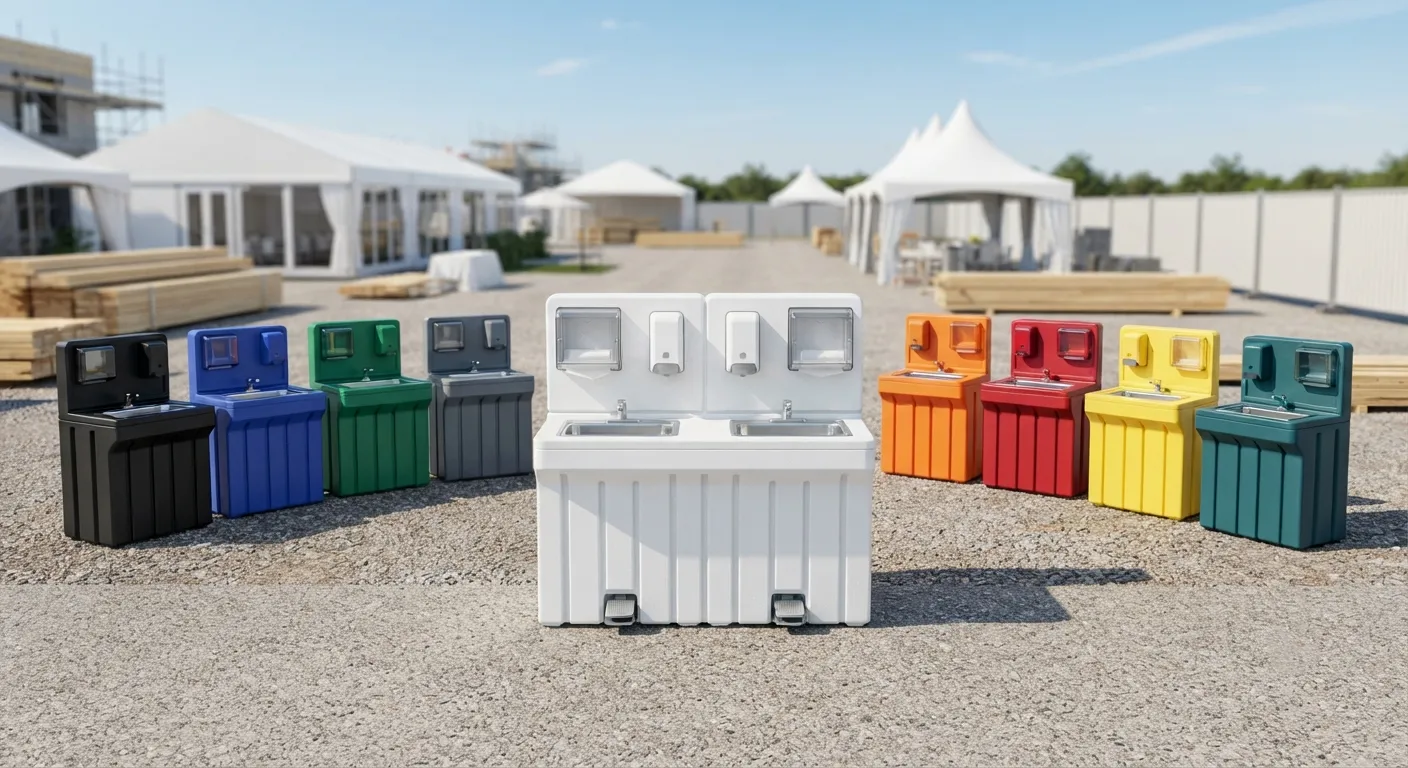
How does a portable sink work?
A portable sink runs on the same no-plumbing logic as the toilet: a freshwater tank up top, a foot pump or hands-free pump pushes water to the faucet, and gray water drains into a tank below the basin. Soap and paper towels sit in dispensers on the unit itself. Under 29 CFR 1910.141(d)(2), washing stations need soap and a towel or hand-drying device. Hand sanitizer alone doesn't satisfy that. A handwashing station rental or portable sink rental gets placed next to restroom clusters on food service sites and farm operations, where OSHA 1928.110 requires a handwashing setup within a quarter mile of hand-labor employees. If your crew is spraying paint, coatings, or pesticides, OSHA 1926.51(f)(1) kicks in separately, requiring washing facilities for that contaminant exposure specifically, not general use.
What chemicals go in a porta potty?
The blue liquid in the tank is a deodorizing and waste-digesting chemical, similar in purpose to what goes into a septic tank cleaning chemical treatment, though the porta potty version is diluted for a sealed tank rather than a drain field. It's added at every service visit alongside a tank rinse. Search "portable toilet chemicals near me" and you'll mostly find suppliers selling the same blue concentrate we already stock on our trucks, so you don't need to source it yourself with a rental. ANSI/PSAI Z4.3, the industry sanitation standard, sets a baseline of one service visit per week for up to 10 users across a 40 hour week, which is why job sites and long events in Boynton Beach get a fixed weekly route. If you're weighing a monthly porta potty rental against a porta potty rental per day unit, that service interval is baked into the price either way.
How do camping porta potties work?
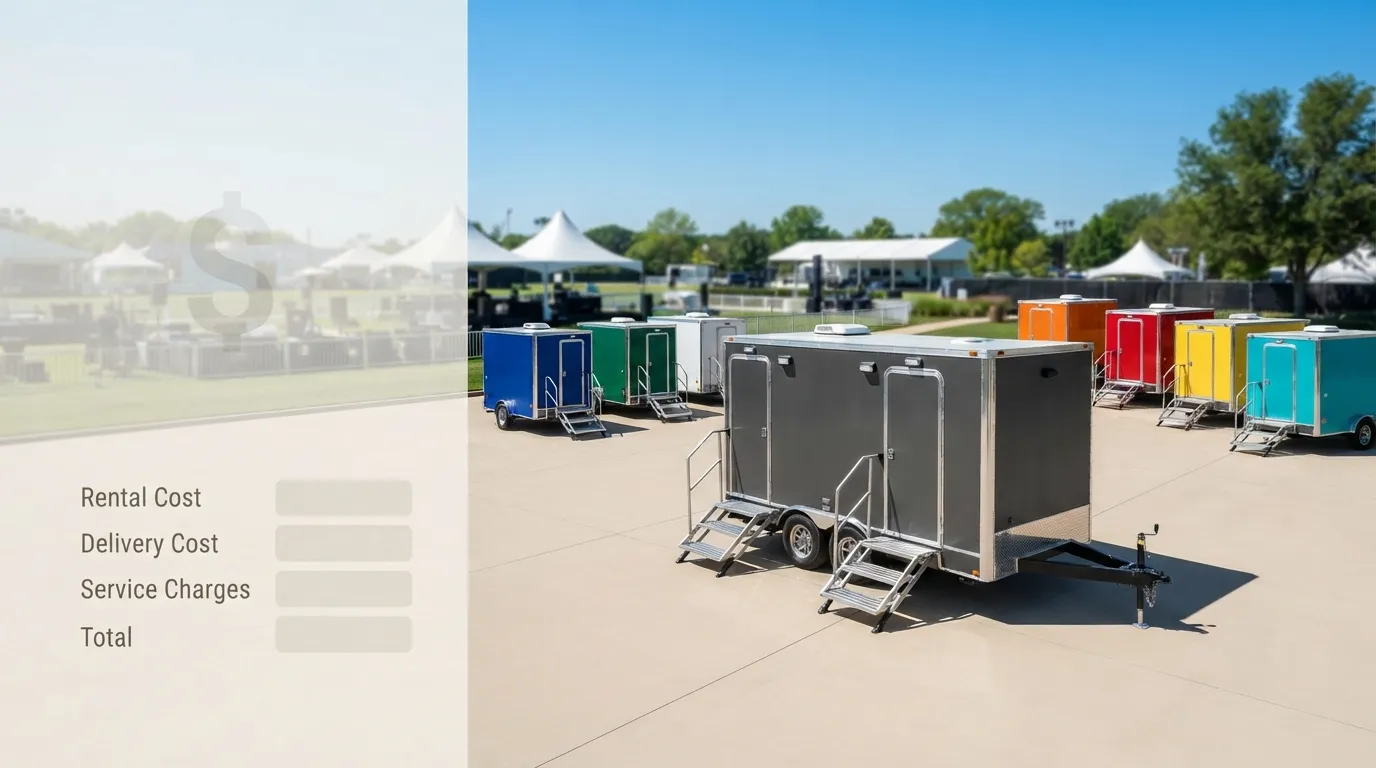
Camping units work the same way as job site models, just smaller and sometimes without a tank vent stack, since they're rented for shorter stretches. A camping porta potty placed at a weekend site near Boynton Beach uses the same blue chemical and sealed tank, serviced once at drop-off and once at pickup for a short trip. For festivals and races that run multiple days, an event restroom rental or festival restroom rental package usually adds a mid-event service. Renters as far as Lake Worth Beach, 7.6 miles north, and Palm Springs, 9.8 miles north, use the same delivery trucks and route schedule we run through Boynton Beach proper.
Do porta potties smell?
A well-serviced unit shouldn't smell much past the first few seconds. The vent stack pulls odor upward and the tank chemical suppresses it between visits. Heat and high use speed odor buildup, which is why our how often are porta potties cleaned page explains service frequency in more detail.
How do porta potties work in a diagram?
Think three stacked parts: a vented booth on top, a seat and riser in the middle, and a 60 to 70 gallon tank at the base. Water never enters a standard unit. A flushable model adds a small freshwater reservoir above the tank.
Can I flush anything in a portable toilet?
Only human waste and toilet paper. Wipes, feminine products, and trash clog the tank and complicate pump-outs. This holds for both standard and deluxe units across every site we service in Boynton Beach.
Do portable sinks need a water hookup?
No. They run on an onboard freshwater tank, so placement isn't limited by nearby plumbing. That's why they pair easily with fencing at temporary fence rental job perimeters or standalone events.
How often does a septic tank need cleaning?
A residential septic tank typically needs pumping every 3 to 5 years, depending on tank size and household size. That's a separate system from portable units; see septic pumping service for tank-specific scheduling.
Next step
Get a delivery date
Tell us the address, the dates and the headcount. We size the order and confirm the route.